Getting Found on Google Was Step One. This Is Step Two.
GEO means getting your business recommended when customers ask AI assistants like ChatGPT. SEO is ranking in Google search. Here is the difference and why
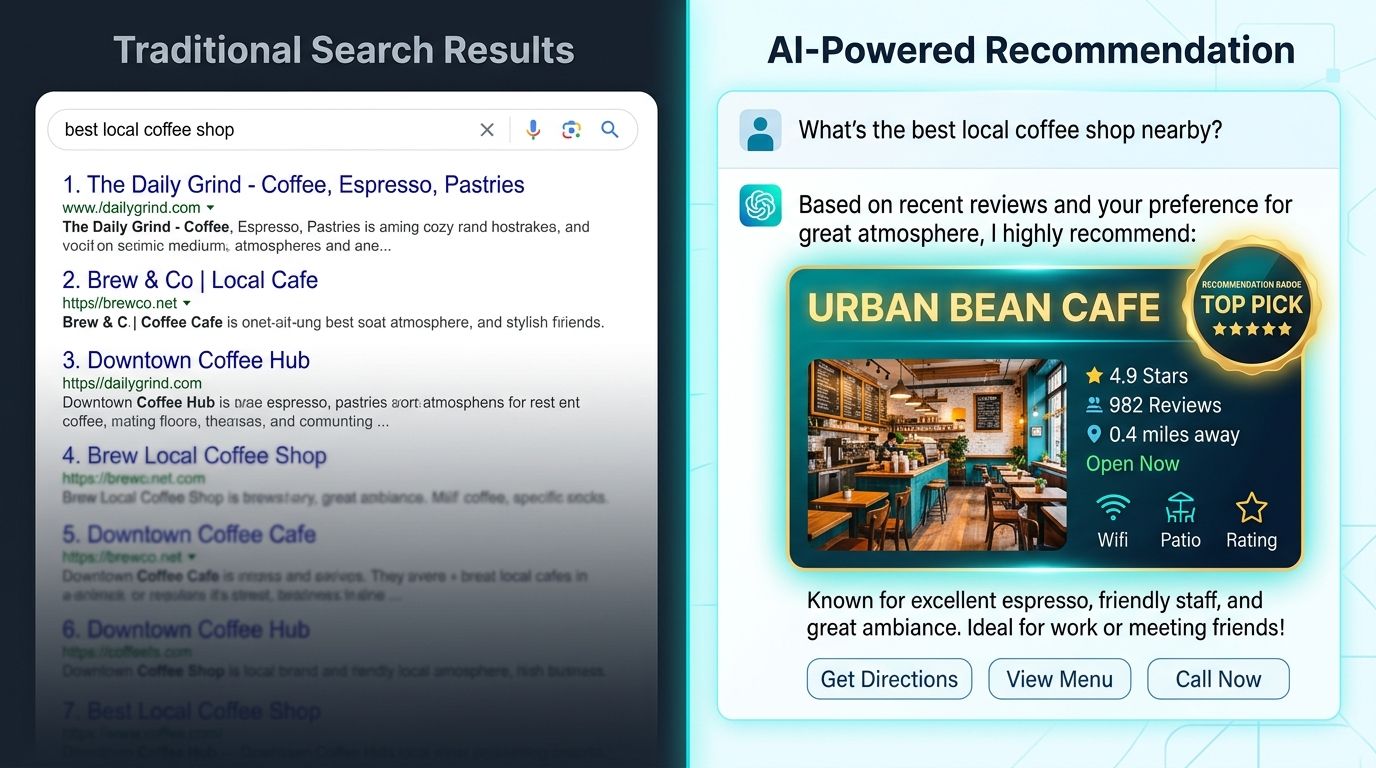
GEO means getting your business recommended when a customer asks an AI assistant like ChatGPT or Perplexity a question. SEO is the older discipline of ranking your website in a traditional Google search. Both are about being found. The difference is where the customer is looking.
Here is the shift. For years, a customer typed a few words into Google and scrolled a page of blue links. More and more, that same customer opens ChatGPT and asks a full question. Where can I get my winter tires swapped near me this week. Which local shop handles this kind of repair. The AI does not hand back ten links. It gives an answer, and it names a few businesses. GEO is about being one of the businesses it names.
The two are related but not the same. SEO is built around keywords, backlinks, and where you sit on a results page. GEO is about whether an AI model understands what you do, who you serve, and where you are, clearly enough to recommend you when it forms an answer. You can rank well on Google and still be invisible in an AI answer, because the machine is reading and summarizing, not just ranking.
Why this matters now. The behaviour has already changed for a lot of people, and it is changing fastest among the customers who are comfortable asking an assistant instead of searching. If your business is not legible to these tools, you are not in the conversation when a ready customer asks for a recommendation. That gap is quiet. You will not see it in your search rankings, because it is happening somewhere your old reports do not look.
What GEO involves at a high level. It starts with a website foundation that states plainly what you do, where you operate, and the specifics that matter to a customer. On top of that sits an ongoing content engine that keeps answering the real questions people ask, in language a model can read and trust. It is less about tricks and more about being clear and consistent over time.
Why most small businesses are not set up for it yet. Owner-operators built their web presence for Google, often years ago, and for a human skimming a homepage. That content is thin on the specifics an AI needs, and it rarely gets updated. Larger companies have teams working on this now. The small operator running the business day to day does not, which is exactly the gap we work in.
We cannot promise you a specific spot in any AI answer, and you should be wary of anyone who does, since these systems are not ours to control. What we can do is make sure your business is set up to be found, with a foundation and a content engine built around how your business actually runs. If you are curious where you stand today, that is a reasonable place to start.